
Resolve delivery exceptions
Bring together delivery evidence and driver updates, prepare the next action and ask dispatch to approve exceptions.
Logistics & TransportAutonomous Agents
For work that spans several steps, systems and days. Autonomous Agents work towards an agreed goal, carry approved context between steps and pause at checkpoints when a decision, prerequisite or approval is needed.
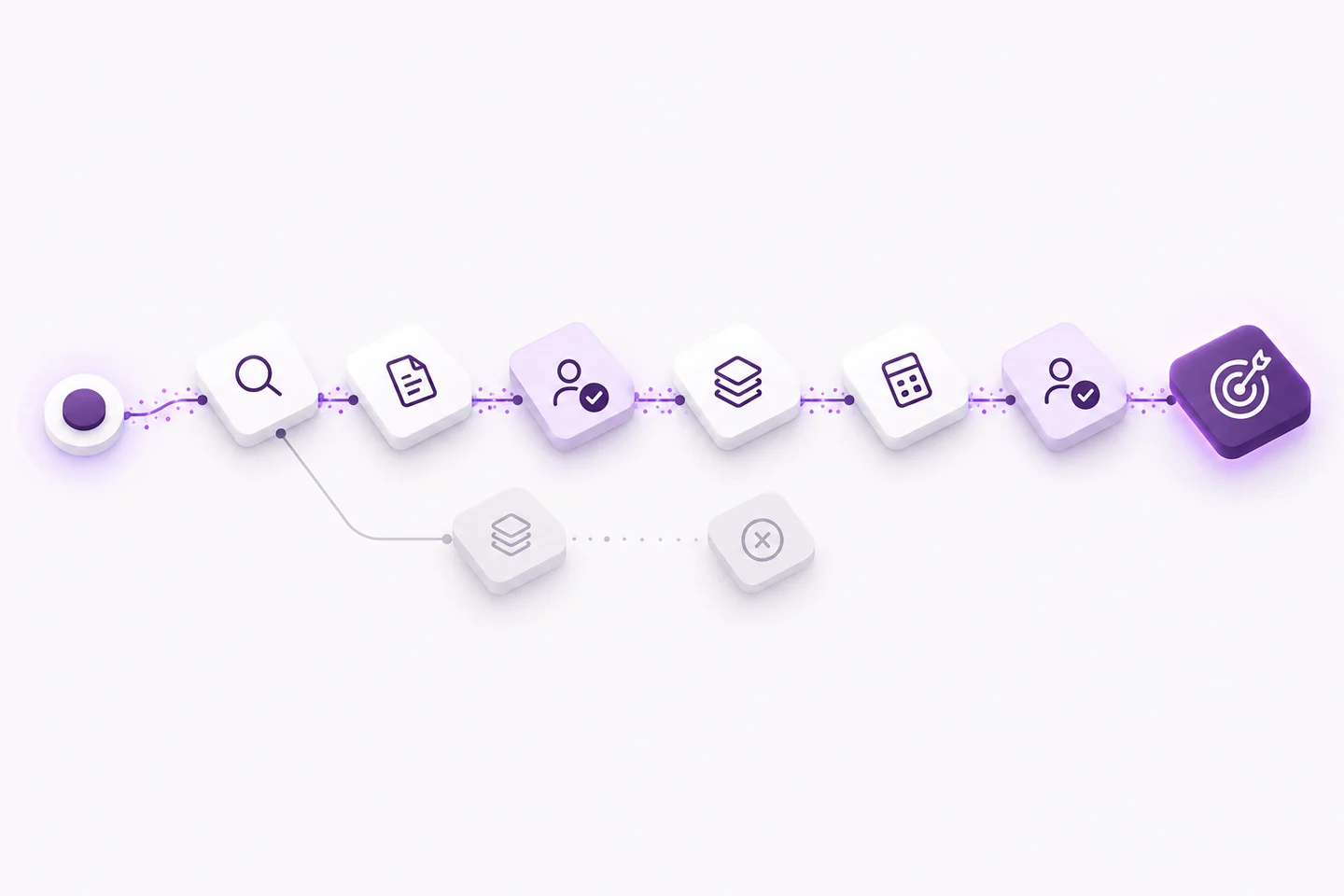
Use them when the work is goal-driven rather than one request and one reply, and when progress depends on several sources or systems.
Bring together delivery evidence and driver updates, prepare the next action and ask dispatch to approve exceptions.
Logistics & TransportWork through product requirements, catalogue information and account context, then hand a quotation draft to sales.
See product reasoningCompare evidence from approved sources, record open questions and prepare a sourced report with clear next actions.
Browse the workflow libraryWe design the workflow and its improvement cycle together. Task context supports the next step, while recorded outcomes and reviewed feedback inform approved changes.

Define the outcome, owner, permitted actions and completion criteria.
Carry approved records and task progress between the agreed steps.
Choose the next permitted action and work with the connected business systems.
Ask for missing information or human approval before continuing.
Save the result and handoff so the team can see what happened.
Review exceptions, validate changes to instructions or tools and approve updates before rollout.
Human review
Keep autonomy within agreed permissions. Preserve the context needed to review a decision, and pause when a prerequisite, approval or reliable answer is missing.
The agent carries work through several permitted steps towards a defined goal. It uses the available context, checks progress and asks a person when an agreed boundary is reached.
Your team and Multibot review outcomes, exceptions and feedback. We use that evidence to refine instructions or tools, validate the agreed changes and obtain approval before rollout. Agents do not change their own instructions in production.
We scope longer-running work, retained context and continuation checkpoints around the process and connected systems. The implementation defines when work can continue, wait or return to a person.
We choose the model and provider for each task during scoping, based on the language, accuracy, latency and data-handling requirements. The workflow is not tied to one provider, so a step can be changed later if the agreed requirements change.

Discovery call
Bring us a process, a recurring enquiry or a pile of documents. We will explore where agents fit and what a useful implementation needs.
Book a discovery call